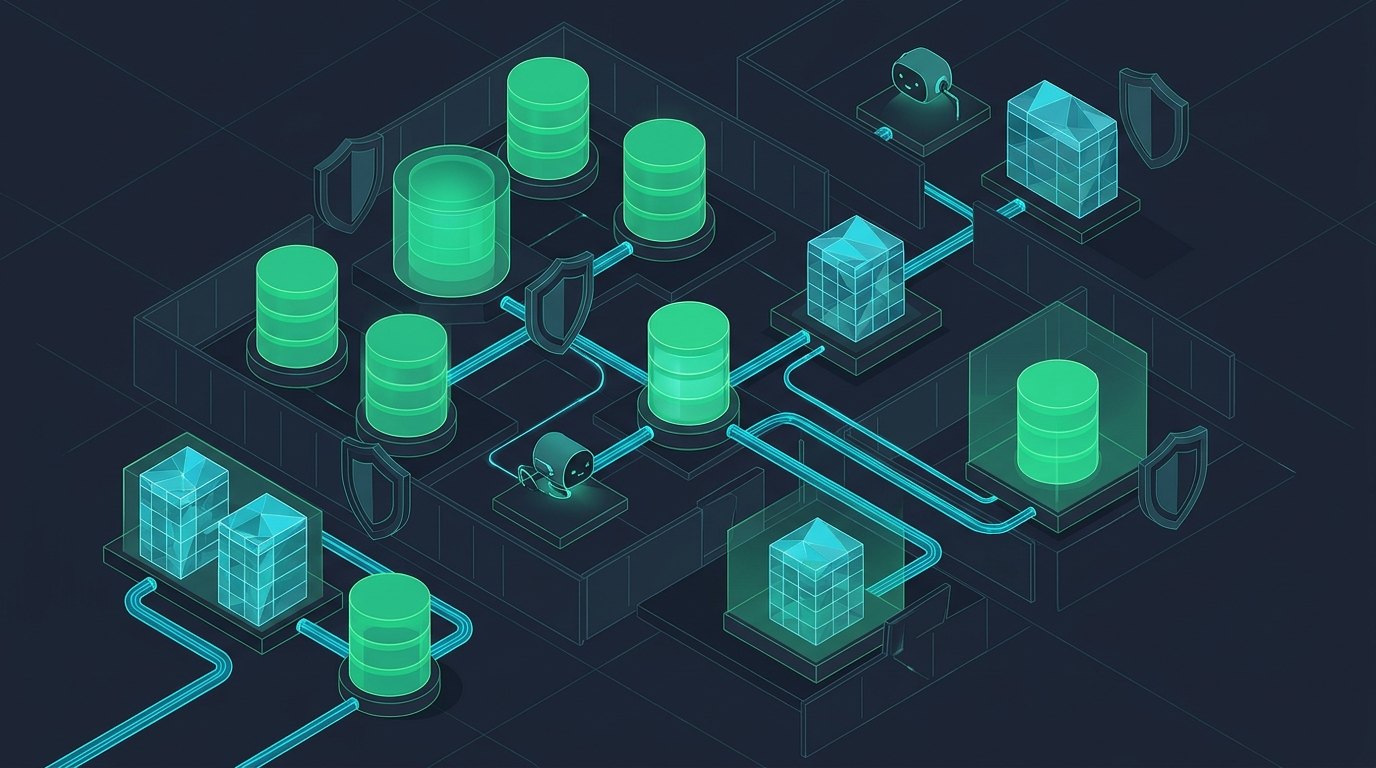
1. Why Postgres + Supabase Wins for Production AI Agents
Early AI prototypes glued together a vector database, a Redis queue, a document store, and custom auth middleware—creating sync drift and multi-tenant data leaks. Modern agent backends consolidate memory, retrieval, permissions, and async execution onto a single PostgreSQL engine powered by Supabase.
The 4-Stage Multi-Tenant Agent Data Flow
When an agent executes a tool call on behalf of a user, security cannot rely on prompt instructions. Instead, the user’s JWT travels from the client through your Edge Function or API route straight into Postgres, where Row-Level Security (RLS) filters both relational rows and pgvector embeddings before the LLM ever sees a single token.
service_role key, Postgres physically refuses to return unauthorized rows—even if the agent hallucinates a broad WHERE clause.
2. Supabase Primitive Decision Matrix for AI Agent Workloads
Do not stuff long-running LLM loops into synchronous HTTP Edge Functions or rely on pure cosine similarity for SKU lookups. Pick the right Supabase primitive for each phase of your agent lifecycle.
| Primitive | Best-Fit Agent Workload | Key 2026 Capability | Security Boundary | Anti-Pattern to Avoid |
|---|---|---|---|---|
Postgres + RLSpublic / app |
Agent state, thread history, tool audit logs, multi-tenant records | InitPlan (select auth.uid()), partial B-Tree indexes, JSONB |
Row-Level Security + security invoker views |
Using service_role in user-facing agent APIs |
pgvector HybridHNSW + tsvector |
RAG knowledge bases, semantic + exact keyword & ID lookup | pgvector 0.8+ iterative scans, halfvec quantization, RRF SQL |
RLS filters vectors inside the same SQL transaction | Vector-only search without lexical fallback or filters |
Edge FunctionsDeno Runtime |
Auth-checked tool endpoints, webhooks, lightweight AI proxy calls | Globally distributed, low cold-start, native Supabase JWT client | Forward Authorization header to user-scoped client |
Running 5-minute batch scrapes synchronously in HTTP |
Queues & Cronpgmq + pg_cron |
Document chunking, bulk embeddings, retryable agent background jobs | Exactly-once visibility timeout, durable archive, Cron-triggered workers | Private schema + Vault secrets for pg_net calls |
Fire-and-forget promises that die on function timeout |
Branching 2.0Preview / Persist |
Safe AI-authored schema migrations, RLS testing, PR previews | Data-less isolated clones with Edge Functions & migration history | Isolated credentials; zero production PII by default | Letting coding agents run DDL directly on production |
When to Use Single Postgres vs. Adding Specialized Extensions
- Zero Sync Drift: Deleting a document immediately removes its chunks and embeddings via
ON DELETE CASCADE. - Filtered Recall Fixed: pgvector 0.8+
hnsw.iterative_scankeeps scanning the graph untilLIMIT krows pass your tenant RLS filter. - Half the RAM: Storing OpenAI/Gemini embeddings as
halfvec(1536)cuts index memory by 50% with negligible recall loss.
- Disk-Backed ANN: When HNSW graphs exceed instance RAM (HNSW uses ~2–3× raw vector bytes), evaluate DiskANN /
pgvectorscaleor binary quantization. - Tenant Partitioning: Partition massive
document_chunkstables byorg_idor time range so each HNSW index stays hot in memory. - Read Replicas: Route heavy analytical and RAG retrieval traffic to a dedicated read replica while writes hit primary.
EXPLAIN (ANALYZE, BUFFERS)—90% of slowdowns come from an unindexed RLS column or an unwrapped auth.uid() call.
3. Command Center HUD: Supabase Studio, RLS Inspector & MCP
Before giving an AI agent access to your database, master these seven high-leverage controls spanning Supabase Studio’s SQL/RLS workspace, Security Advisors, and live Supabase MCP audit logs.
Swipe horizontally to view the full interactive workspace mockup
authenticated (org_9f2a)
4
-- Planning Time: 0.42 ms | Execution Time: 11.8 ms (HNSW + GIN + RLS InitPlan)
public.document_chunks
5
org_id = (select private.current_org_id())owner_id = (select auth.uid())get_advisors(security) → 0 criticalapply_migration → BLOCKED (read_only)create_branch → feat/rls-hybrid-raggenerate_typescript_types → 200 OKembed_jobs: 4 queued
1Branch Switcher: Isolates agent schema edits on a data-less Preview Branch before any migration touches production.
2MCP Scope Badge: Confirms project_ref pinning and read_only=true so coding agents cannot mutate production tables.
3Security & Perf Advisors: Flags tables missing RLS, unindexed foreign keys, and security definer view leaks automatically.
4Role Impersonation Runner: Tests SQL/RPC queries as a specific authenticated user JWT rather than Postgres superuser.
5RLS Policy Inspector: Audits every command (SELECT, INSERT, UPDATE, DELETE) to verify explicit TO authenticated clauses.
6MCP & Edge Logs (query_logs): Lets you (or a debugging agent) run read-only SQL over 24 hours of Edge Function and Auth traces.
7Supavisor & Queue Telemetry: Monitors Transaction Pooler saturation (port 6543) and pgmq embedding worker backlogs.
postgres in the SQL Editor bypass RLS completely. Always toggle Role Impersonation (#4) to a real test user—or wrap tests in SET LOCAL role = authenticated; SET LOCAL request.jwt.claims = '...';—before shipping an agent tool.
4. Hybrid Vector + Full-Text Search with pgvector & RRF
Pure semantic embeddings excel at conceptual intent (“cancel my plan”) but miss exact error codes, SKUs, and proper nouns (“ERR_409_STRIPE”). Combining HNSW vector search with Postgres GIN full-text search via Reciprocal Rank Fusion (RRF) delivers enterprise-grade RAG recall inside one SQL call.

tsvector matches (right) are scored independently and merged via RRF: score = 1/(k + rank_sem) + 1/(k + rank_fts) with default smoothing constant k = 60.
1. Schema, Halfvec & Dual Indexes
CREATE EXTENSION IF NOT EXISTS vector;

CREATE TABLE public.doc_chunks (
  id bigint GENERATED ALWAYS AS IDENTITY PRIMARY KEY,
  org_id uuid NOT NULL,
  content text NOT NULL,
  fts tsvector GENERATED ALWAYS AS
    (to_tsvector('english', content)) STORED,
  embedding halfvec(1536) NOT NULL
);

-- Fast ANN + Full-Text + Tenant Filter Indexes
CREATE INDEX doc_chunks_hnsw_idx ON public.doc_chunks
  USING hnsw (embedding halfvec_cosine_ops)
  WITH (m = 16, ef_construction = 64);

CREATE INDEX doc_chunks_fts_idx ON public.doc_chunks
  USING gin (fts);

CREATE INDEX doc_chunks_org_idx ON public.doc_chunks (org_id);
2. RRF Hybrid Search RPC (RLS-Safe)
CREATE OR REPLACE FUNCTION public.hybrid_search(
  query_text text, query_emb halfvec(1536),
  match_count int DEFAULT 8, rrf_k int DEFAULT 60
) RETURNS TABLE (id bigint, content text, score float)
LANGUAGE sql STABLE SECURITY INVOKER AS $$
WITH fts AS (
  SELECT id, row_number() OVER (
    ORDER BY ts_rank_cd(fts, websearch_to_tsquery(query_text)) DESC
  ) AS rank_ix FROM public.doc_chunks
  WHERE fts @@ websearch_to_tsquery('english', query_text)
  LIMIT match_count * 2
),
sem AS (
  SELECT id, row_number() OVER (
    ORDER BY embedding <=> query_emb
  ) AS rank_ix FROM public.doc_chunks
  ORDER BY embedding <=> query_emb
  LIMIT match_count * 2
)
SELECT d.id, d.content,
  (COALESCE(1.0/(rrf_k + fts.rank_ix), 0.0) +
   COALESCE(1.0/(rrf_k + sem.rank_ix), 0.0))::float AS score
FROM fts FULL OUTER JOIN sem ON fts.id = sem.id
JOIN public.doc_chunks d ON COALESCE(fts.id, sem.id) = d.id
ORDER BY score DESC LIMIT match_count;
$$;org_id or RLS could return fewer than LIMIT k rows if top-k graph neighbors belonged to other tenants. On pgvector 0.8+, enable SET LOCAL hnsw.iterative_scan = relaxed_order; inside your search RPC so Postgres automatically expands the HNSW traversal until your tenant’s quota is filled.
5. Bulletproof Row-Level Security (RLS) Guardrails for AI Agents
Every table exposed to Supabase’s Data API or queried by an agent must enforce RLS. A single missing policy or accidental service_role client in an agent tool turns a prompt injection into a cross-tenant data breach.
Anatomy of a Production-Grade, Fast RLS Policy (5 Parts)
1. FOR INSERT 2. TO authenticated
5. WITH CHECK ( 3. created_by = (SELECT auth.uid()) AND 4. org_id IN (SELECT org_id FROM private.user_orgs()) );
SELECT, INSERT, UPDATE, and DELETE policies instead of FOR ALL so read-only agents cannot mutate rows.
TO authenticated. Unauthenticated anon requests short-circuit in < 0.1 ms instead of scanning tables.
(SELECT auth.uid()) so Postgres caches the UUID once per query rather than re-evaluating per row (up to 20× faster).
org_id IN (SELECT ...) via a SECURITY DEFINER helper in a non-exposed private schema (with SET search_path = '') to avoid recursive RLS joins.
USING gates which existing rows an agent can read or target; WITH CHECK validates new/updated row payloads so an agent cannot forge another tenant’s org_id.
JWT Propagation vs. service_role Danger
| Auth Pattern | How It Works | RLS Enforcement | When to Use in Agent Systems |
|---|---|---|---|
User JWT Forwardinganon/publishable + Bearer |
Pass user’s Authorization header into createClient() inside Edge Function / API route |
100% Enforced (Postgres sees exact auth.uid() & claims) |
Default for all user-facing agent tools, RAG search, and memory writes |
Scoped Custom Roleagent_reader |
Dedicated Postgres role with explicit GRANT SELECT on specific views/columns only |
Table + Column Scoped (optionally + RLS) | Autonomous analytics / BI agents querying aggregated reporting views |
service_role Keybypassrls = true |
Admin key that skips every RLS policy on every table in the database | BYPASSED COMPLETELY | Background trusted workers only (e.g., pgmq embedder, Stripe webhooks) |
security_invoker = truepostgres), silently bypassing RLS! Always create agent-facing views with CREATE VIEW v WITH (security_invoker = true) AS ... and run Supabase Security Advisors on every PR.
6. Supabase MCP Server & Official supabase/agent-skills
Stop copy-pasting table schemas and slow query plans into chat. Pair Supabase’s hosted Remote MCP Server (with OAuth and read-only guardrails) with the official supabase/agent-skills repository so coding agents write production-grade Postgres from the first prompt.
Pin project_ref, enable read_only=true for production debugging, and restrict features to only needed tool groups:
{
  "mcpServers": {
    "supabase": {
      "type": "http",
      "url": "https://mcp.supabase.com/mcp?project_ref=YOUR_REF&read_only=true&features=database,docs,debugging"
    }
  }
}supabase/agent-skillsEquips Claude Code, Cursor, Codex, and Windsurf with Supabase’s curated Postgres rules across 8 impact-ordered categories:
npx skills add supabase/agent-skills \
--skill supabase-postgres-best-practices- Covers: Query perf, Supavisor connections, RLS security, schema design, locking, data access, monitoring &
pgvector/pgmq. - Format: Flawed vs. corrected SQL +
EXPLAINproofs.
Safe Agentic Migration Workflow: Read-Only vs. Branch-Scoped MCP
| Environment | Recommended MCP Mode | Allowed Agent Actions | Risk Mitigated |
|---|---|---|---|
Productionmain project |
read_only=true + features=debugging,docs (or no MCP) |
Run query_logs (24h window), inspect get_advisors, analyze slow queries |
Blocks destructive DDL, rogue writes, and data tampering |
Preview Branchfeat/* PR clone |
Branch-scoped MCP (project_ref=branch_ref) |
apply_migration, create RLS policies, deploy Edge Functions, regenerate TS types |
Data-less clone prevents PII exfiltration while testing real SQL |
| Runtime End-User Agent | PostgREST / User-JWT API (NOT Management MCP) | Execute approved RPCs and RLS-filtered queries as authenticated user | Prevents prompt-injected agents from reading cross-tenant tables |
read_only=true Does NOT Stop- “Run security advisors and write a migration fixing every table missing RLS.”
- “Check the last hour of Edge Function logs and trace why
embed-workertimed out.” - “Apply migration to branch, then regenerate
database.types.ts.”
7. Edge Functions, pgmq Queues & Realtime Agent Streams
Keep HTTP request paths fast and resilient. Offload document parsing, chunking, and embedding API calls to Supabase Queues (pgmq) triggered by pg_cron, and stream live agent progress back to the browser over Supabase Realtime.
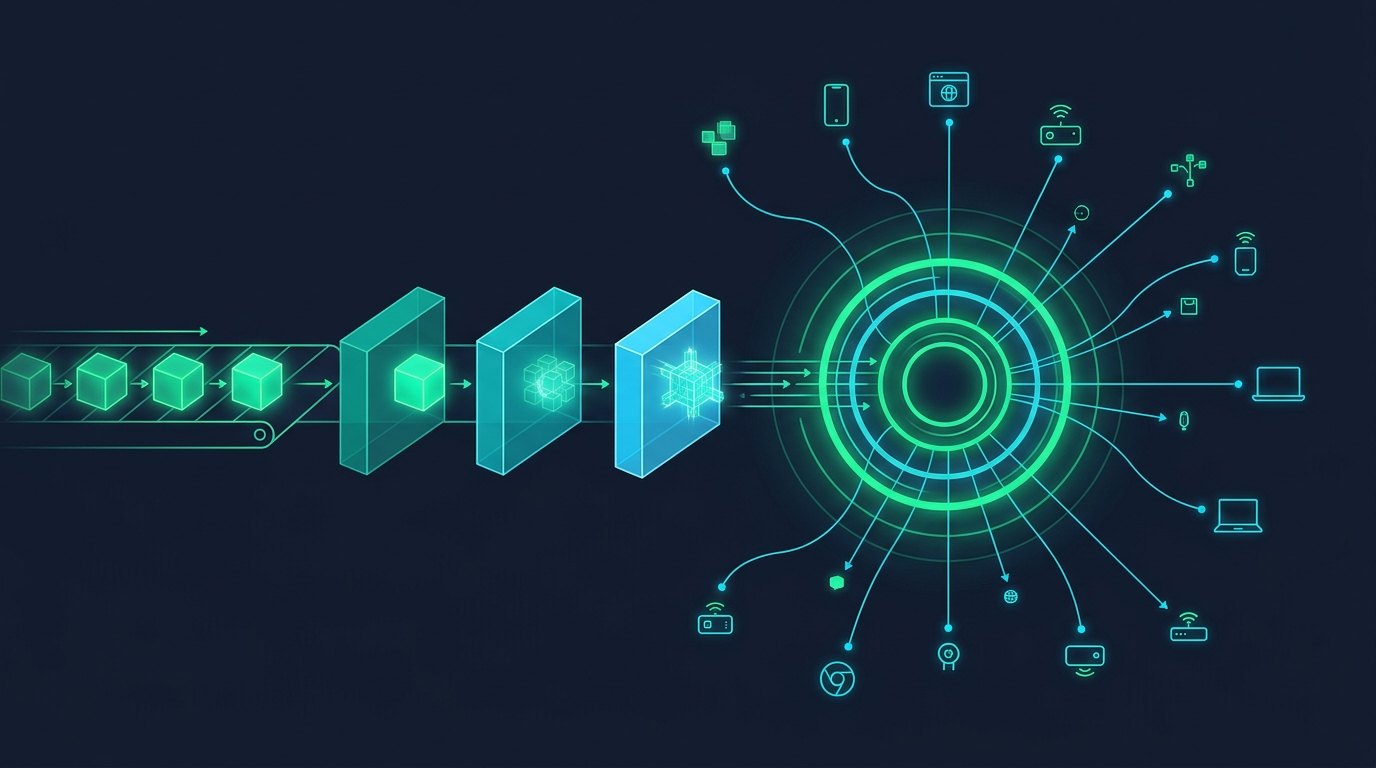
pgmq inside the same Postgres transaction → pg_cron invokes a Deno Edge Function worker → worker embeds chunks into pgvector → Realtime broadcasts completion to subscribed clients.
1. Enqueue & Schedule Worker via pgmq + pg_cron
-- 1. Create durable queue in Postgres
SELECT pgmq.create('embed_jobs');

-- 2. Trigger enqueues job atomically on doc insert
CREATE OR REPLACE FUNCTION private.enqueue_embed()
RETURNS trigger LANGUAGE plpgsql SECURITY DEFINER AS $$
BEGIN
  PERFORM pgmq.send('embed_jobs',
    jsonb_build_object('doc_id', NEW.id, 'org_id', NEW.org_id));
  RETURN NEW;
END; $$;

-- 3. Poll every 10s via pg_cron + pg_net + Vault secret
SELECT cron.schedule('drain-embed-jobs', '10 seconds', $$
  SELECT net.http_post(
    url := 'https://<ref>.supabase.co/functions/v1/embed-worker',
    headers := jsonb_build_object(
      'Authorization', 'Bearer ' ||
      (SELECT decrypted_secret FROM vault.decrypted_secrets
       WHERE name = 'worker_secret')
    )
  );
$$);
2. Deno Edge Worker + Realtime Broadcast
// supabase/functions/embed-worker/index.ts
const { data: jobs } = await admin.schema('pgmq')
  .rpc('read', { queue_name: 'embed_jobs', vt: 60, qty: 10 });

for (const job of jobs ?? []) {
  const { doc_id, org_id } = job.message;
  const vec = await embedText(await fetchDoc(doc_id));
  await admin.from('doc_chunks').upsert({
    doc_id, org_id, embedding: vec
  });
  // Archive completed message for audit trail
  await admin.schema('pgmq').rpc('archive', {
    queue_name: 'embed_jobs', msg_id: job.msg_id
  });
  // Push live status to tenant UI without polling
  await admin.channel(`org:${org_id}:agents`).send({
    type: 'broadcast', event: 'doc_indexed',
    payload: { doc_id, status: 'ready' }
  });
}pgmq Beats External Queues for Agent Backendspgmq lives inside Postgres, you get the Transactional Outbox pattern for free: inserting a document and enqueuing its embedding job commit atomically. If a worker crashes mid-LLM call, the vt: 60 visibility timeout automatically makes the message visible again for retry—zero lost jobs, zero Redis ops.
8. 5 Real-World SQL, RLS & Edge Function Recipes
Battle-tested building blocks you can drop directly into your migrations and Edge Functions to cover agent memory, multi-tenant isolation, semantic caching, and token-budget auditing.
| Recipe | Problem Solved | Postgres Primitive | Target Latency / Benefit |
|---|---|---|---|
| 1. User-Scoped Edge Client | Prevent RLS bypass in agent tool endpoints | JWT Header Forwarding | Zero cross-tenant leakage |
| 2. Semantic Prompt Cache | Avoid paying for repeated identical LLM queries | halfvec + cosine < 0.06 |
< 25 ms cache hit; 40–70% savings |
| 3. Thread Memory + TTL | Store resumable agent checkpoints cleanly | JSONB + pg_cron sweep |
Bounded table bloat |
| 4. Per-Tenant Token Ledger | Enforce monthly LLM spend limits atomically | INSERT ... ON CONFLICT |
Race-free quota enforcement |
| 5. Safe RLS Unit Test | Verify tenant isolation in CI before deploy | SET LOCAL role + claims |
Catches regressions on PR |
import { createClient } from 'jsr:@supabase/supabase-js@2';

export function getUserClient(req: Request) {
  const auth = req.headers.get('Authorization') ?? '';
  return createClient(
    Deno.env.get('SUPABASE_URL')!,
    Deno.env.get('SUPABASE_ANON_KEY')!,
    { global: { headers: { Authorization: auth } } }
  );
} // All .rpc() & .from() calls now obey Postgres RLS!SELECT response_text FROM public.llm_cache
WHERE org_id = (SELECT private.current_org_id())
AND created_at > now() - interval '24 hours'
AND (prompt_emb <=> $1::halfvec(1536)) < 0.06
ORDER BY prompt_emb <=> $1::halfvec(1536) LIMIT 1;pg_cronSELECT cron.schedule('prune-old-checkpoints', '0 3 * * *', $$
DELETE FROM public.agent_checkpoints
WHERE updated_at < now() - interval '30 days';
$$);CREATE OR REPLACE FUNCTION private.consume_tokens(
p_org uuid, p_tokens int, p_limit int
) RETURNS boolean LANGUAGE plpgsql AS $$
DECLARE v_used int;
BEGIN
INSERT INTO private.token_usage (org_id, month, tokens)
VALUES (p_org, date_trunc('month', now())::date, p_tokens)
ON CONFLICT (org_id, month)
DO UPDATE SET tokens = token_usage.tokens + EXCLUDED.tokens
WHERE token_usage.tokens + EXCLUDED.tokens <= p_limit
RETURNING tokens INTO v_used;
RETURN v_used IS NOT NULL;
END; $$;BEGIN;
SET LOCAL role = authenticated;
SET LOCAL request.jwt.claims = '{"sub":"user-A","org_id":"org-A"}';
-- Must return 0 rows belonging to org-B:
DO $$ BEGIN
IF EXISTS (SELECT 1 FROM public.doc_chunks WHERE org_id = 'org-B')
THEN RAISE EXCEPTION 'RLS BREACH: Cross-tenant read detected!';
END IF;
END $$;
ROLLBACK;9. Supavisor Pooling, Vault Secrets & Production Ops
Autonomous agents generate bursty, high-concurrency database traffic. Without proper connection pooling, secret hygiene, and least-privilege roles, a viral agent launch will exhaust max_connections in seconds.
6543)- Default for Serverless & Agents: Port
6543borrows a Postgres backend only for the duration of a single transaction, multiplexing thousands of agent workers over a small pool. - Disable Prepared Statements: Set
prepare: false(postgres.js / Drizzle) orpgbouncer=true(Prisma) because transaction pooling rotates backend connections. - Reserve Port
5432: Use Session Mode / Direct connection only for DDL migrations,pg_dump, or long-livedLISTEN/NOTIFYworkers.
- Encrypted at Rest: Store LLM API keys, webhook tokens, and internal worker secrets in
vault.secrets(encrypted via libsodium). - Zero Hardcoded Tokens in SQL:
pg_cronandpg_netread secrets at runtime viavault.decrypted_secretsinstead of embedding plaintext keys in migration files. - Lock Down Access: Never expose
vaultvia PostgREST schemas; restrict reads strictly toSECURITY DEFINERfunctions.
Production Defense-in-Depth Matrix
| Operational Layer | Hardening Standard | Verification Command / Check |
|---|---|---|
| Read-Only Agent Role | Create a dedicated role (ai_analyst) with statement_timeout = '5s' and GRANT SELECT on curated views only. |
ALTER ROLE ai_analyst SET statement_timeout = '5s';ALTER ROLE ai_analyst SET default_transaction_read_only = on; |
| Schema Exposure | Keep internal queues, helper functions, and token ledgers in a private schema excluded from PostgREST API settings. |
Dashboard → API Settings → Exposed schemas = public only |
| Point-in-Time Recovery | Enable PITR on production projects so an accidental bulk agent UPDATE or bad migration can rewind to the exact second. |
Verify daily backups + PITR WAL archiving status in Dashboard → Backups |
| Index & Bloat Hygiene | Monitor pg_stat_statements weekly; tune autovacuum on high-churn agent_checkpoints and pgmq tables. |
Run Supabase Performance Advisor + SELECT * FROM pg_stat_user_tables; |
statement_timeout (preventing runaway full-table vector scans) with an atomic per-tenant token ledger (Recipe 4) and Supavisor pool limits so one misbehaving agent session can never starve other tenants.
10. Cross-Tool Synergy: From Coding Agent to Production Postgres
The fastest AI engineering teams combine supabase/agent-skills, Preview Branches, and the Vercel AI SDK into a deterministic loop where every schema change is tested, typed, and RLS-verified before it ever reaches production.
Connecting Vercel AI SDK Tools to User-Scoped Supabase RPCs
// app/api/agent/route.ts — Next.js + Vercel AI SDK + Supabase SSR
import { streamText, tool } from 'ai';
import { z } from 'zod';
import { createServerClient } from '@/lib/supabase/server';

export async function POST(req: Request) {
  const supabase = await createServerClient(); // Reads user session JWT from cookies
  const { messages } = await req.json();

  return streamText({
    model: 'anthropic/claude-sonnet-4.5',
    messages,
    tools: {
      searchKnowledgeBase: tool({
        description: 'Hybrid semantic + keyword search over tenant documents',
        inputSchema: z.object({ query: z.string().min(2) }),
        execute: async ({ query }) => {
          const emb = await embedQuery(query);
          // Executes under user JWT -> RLS automatically enforces org_id isolation
          const { data, error } = await supabase.rpc('hybrid_search', {
            query_text: query, query_emb: emb, match_count: 6
          });
          if (error) throw error;
          return data;
        },
      }),
    },
  }).toUIMessageStreamResponse();
}
After your agent applies a migration to the Preview Branch, run supabase gen types typescript --linked > lib/database.types.ts (or invoke MCP’s generate_typescript_types) so your AI SDK tool inputs and RPC return types stay 100% compiler-checked.
With the official Supabase–Vercel integration, every GitHub PR automatically injects the Preview Branch’s SUPABASE_URL and keys into Vercel’s preview deployment—letting QA test full agent chat flows against isolated schema changes.
11. Troubleshooting Clinic (Top 7 Fixes) & Pre-Flight Checklist
Bookmark this diagnostic table for the seven most common failure modes in Postgres-backed AI agents, then sign off on all six pre-flight checks before opening production traffic.
| Symptom / Error | Root Cause | Exact Fix |
|---|---|---|
1. Agent RPC returns [] |
RLS enabled on table, but no SELECT policy or missing Authorization header. |
Forward user JWT into createClient() and verify explicit FOR SELECT TO authenticated policy. |
| 2. Filtered RAG returns < k rows | HNSW top-k candidates belonged to other tenants before RLS filtered them out. | Enable SET LOCAL hnsw.iterative_scan = relaxed_order; inside your pgvector 0.8+ search RPC. |
3. prepared statement already exists |
ORM/driver using prepared statements over Supavisor Transaction Mode (port 6543). |
Set prepare: false (Drizzle/postgres.js) or ?pgbouncer=true (Prisma) on port 6543. |
| 4. RLS query takes 200ms+ | Unwrapped auth.uid() re-runs per row, or missing index on org_id/user_id. |
Wrap as (SELECT auth.uid()) for InitPlan caching and add a B-Tree index on the RLS filter column. |
| 5. Cross-tenant leak in View | Postgres views default to creator privileges (postgres), bypassing caller RLS. |
Recreate with CREATE VIEW ... WITH (security_invoker = true) and re-run Security Advisors. |
| 6. Edge Function 504 timeout | Synchronous chunking/embedding loop exceeded HTTP request timeout. | Return 202 Accepted immediately; enqueue job in pgmq and drain asynchronously via pg_cron. |
7. max_connections exhausted |
Serverless agent workers connecting directly to port 5432 instead of pooler. |
Switch app runtime to Supavisor Transaction Pooler (port 6543); keep 5432 for migrations only. |
6-Point Production Pre-Flight Checklist
security definer views, and all RLS filter columns indexed.service_role in Agent Routes: Every user-facing Edge Function and AI SDK tool forwards the user JWT; service_role lives strictly in private background workers.hybrid_search uses halfvec HNSW + GIN tsvector + iterative scan, tested under EXPLAIN (ANALYZE, BUFFERS) at < 60 ms p95.read_only=true (or disabled); all agent migrations validated on ephemeral Preview Branches first.6543 with prepared statements disabled; pg_cron / pg_net tokens stored in vault.secrets.statement_timeout, atomic token ledgers cap spend, and Point-in-Time Recovery is enabled.