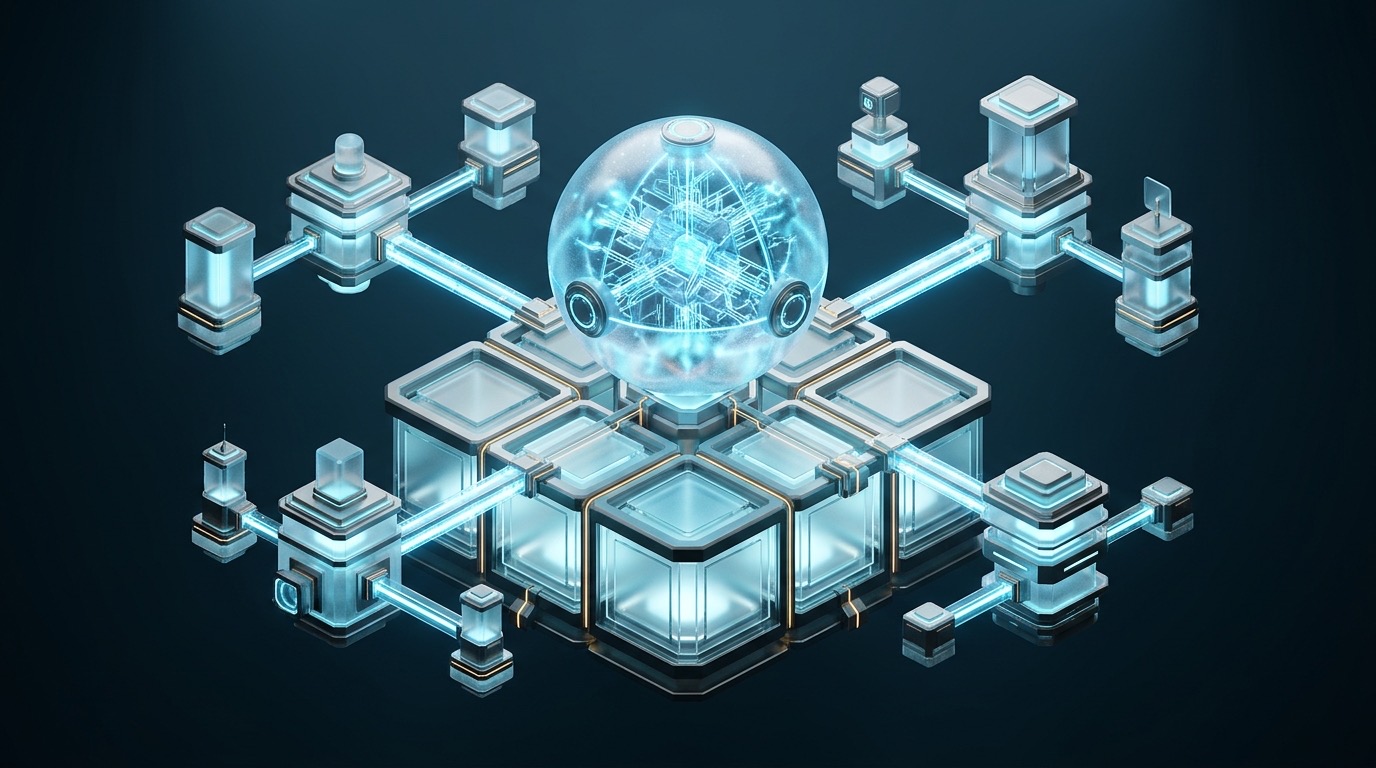
1. Decoupling the Agent Brain From the Hands
Traditional agent scripts tangle LLM reasoning, state persistence, untrusted shell commands, and raw API keys inside one brittle process. Claude Managed Agents separate the stateful reasoning loop (“brain”) from disposable execution containers and authenticated remote /mcp connectors (“hands”).
Quick Navigation
cma-server in Your VPCPart 7
2. Prerequisites & Deployment Topology MatrixPart 2
8. 5 Copy-Paste Agent & MCP BlueprintsPart 8
3. Annotated Control Plane & Connector UIPart 3
9. Blast-Radius Containment & Schema HygienePart 9
4. Why Managed Loops Beat DIY HarnessesPart 4
10. Skills + cma-server + MCP PipelinePart 10
5. Color-Coded Config & Schema AnatomyPart 5
11. Troubleshooting Clinic & Pre-FlightPart 11
6. Remote HTTPS/SSE MCP & OAuth VaultsPart 6
Core Mental Model: Four Independent Planes
An agent definition declares instructions and tool URLs—never credentials. When a session starts, the control plane (Anthropic Cloud or your self-hosted cma-server) persists every turn in PostgreSQL, routes model calls to your chosen inference provider, mounts a clean filesystem container for code execution, and brokers remote /mcp calls through a server-side OAuth Vault.
Architecture: End-to-End Request & Isolation Flow
/mcp servers are called server-side through the Vault proxy. Even if untrusted code runs in bash, it cannot read your GitHub or Stripe OAuth tokens.
2. Prerequisites & Deployment Topology Matrix
Not every workflow needs a self-hosted cluster, and not every connector belongs on a developer laptop. Use the topology matrix below to pick the exact runtime and MCP transport that matches your security, reachability, and residency requirements.
- Remote Connectors: A TLS-terminated HTTPS endpoint exposing
/mcp(Streamable HTTP or SSE) plus OAuth 2.1 metadata or static Bearer headers. - Cloud Managed Agents: Anthropic Console API key, declared Environment ID, and Vault IDs for authenticated MCP calls.
- Self-Hosted
cma-server: Container host (Kubernetes or Docker), PostgreSQL 16+, and an upstream model credential.
- Anthropic API: Direct first-party access to the latest Claude Opus, Sonnet, and Haiku releases with native Vault integration.
- Amazon Bedrock: Route
cma-serverturns via AWS IAM roles to keep inference traffic inside your AWS account. - Google Cloud Vertex AI & Microsoft Foundry: Enterprise billing, VPC Service Controls, and Azure private-link routing without changing agent code.
Deployment Topology Decision Matrix
| Topology | Runtime & State | Network Reachability | Secrets Isolation | Best Fit & Providers |
|---|---|---|---|---|
Local stdio MCPClaude Desktop / Code |
Local child process on user laptop; ephemeral session. | Localhost & VPN; no public URL required. | Local env vars or OS keychain on developer machine. | Individual dev tools, local Git/SQLite; Anthropic API or Bedrock CLI auth. |
| Remote HTTPS/SSE Custom Connector Web, Mobile, Cowork |
Cloud-connected; stateless or MCP server-managed. | Public HTTPS /mcp (or allowlisted Anthropic IPs). |
OAuth 2.1 PKCE, DCR, or enterprise IdP token exchange. | Shared SaaS tools (Linear, Notion, internal APIs) across Web & Mobile. |
| Cloud Claude Managed Agents Anthropic Control Plane |
Fully managed loop + persistent session store + cloud VM. | Cloud-to-cloud HTTPS /mcp; sandbox egress rules. |
Vaults: tokens injected server-side; invisible to sandbox. | Turnkey async bots, triage agents, & background research on Anthropic API. |
Self-Hosted cma-serverYour VPC / On-Prem |
Your container fleet + PostgreSQL 16+ persistence. | Private VPC mesh; reaches internal /mcp without public exposure. |
K8s/HashiCorp Vault + private gateway auth; zero external data store. | Regulated finance/health, private repos; Anthropic, Bedrock, Vertex, Foundry. |
stdio to Remote /mcp + Managed Agents.
3. Annotated Tour: Connectors, Vaults & Session Monitor
Whether you register connectors in Claude Settings or orchestrate headless sessions via cma-server, four unified panels govern every run: the Remote /mcp registry, live session loop telemetry, the OAuth Vault broker, and per-tool read/write gates.
github-prod 1
HTTPS/SSE
https://mcp.acme.dev/github/mcpwarehouse-ro
OAUTH 2.1
https://mcp.acme.dev/sql/mcpvault_01J9X... • PKCE + DCRsess_88a4: Provider Vertex AI (Claude Sonnet) 4 • Turn 4/20 • 212ms DB
env_py312_locked ran pytest • Egress: DENY_ALL
github-prod.get_pull_request → 200 OK (token injected)
github-prod.merge_pr awaits human approval
sql.query_readonlyALLOW
github.get_pr_diffALLOW
github.create_commentASK
github.merge_prASK
Schema tax: 1,380 tokens
Control Plane & Connector Callout Legend
/mcp Registry: Registers HTTPS/SSE endpoints (https://.../mcp) across Web, Mobile, Cowork, and Managed Agents without local binary installs.
agents, sessions, and event logs inside PostgreSQL 16+ so long-running jobs survive restarts and scale horizontally.
cma-server to Anthropic API, Amazon Bedrock, Google Cloud Vertex, or Microsoft Foundry per policy.
bash and file tools to disposable containers with explicit allowed_hosts—blocking arbitrary data exfiltration.
4. Decoupling the Brain From the Hands
Building your own production agent loop looks simple on day one—until timeouts, partial tool errors, context compaction, and shell escapes break in production. Managed Agents separate the durable cognitive loop from isolated execution workspaces.
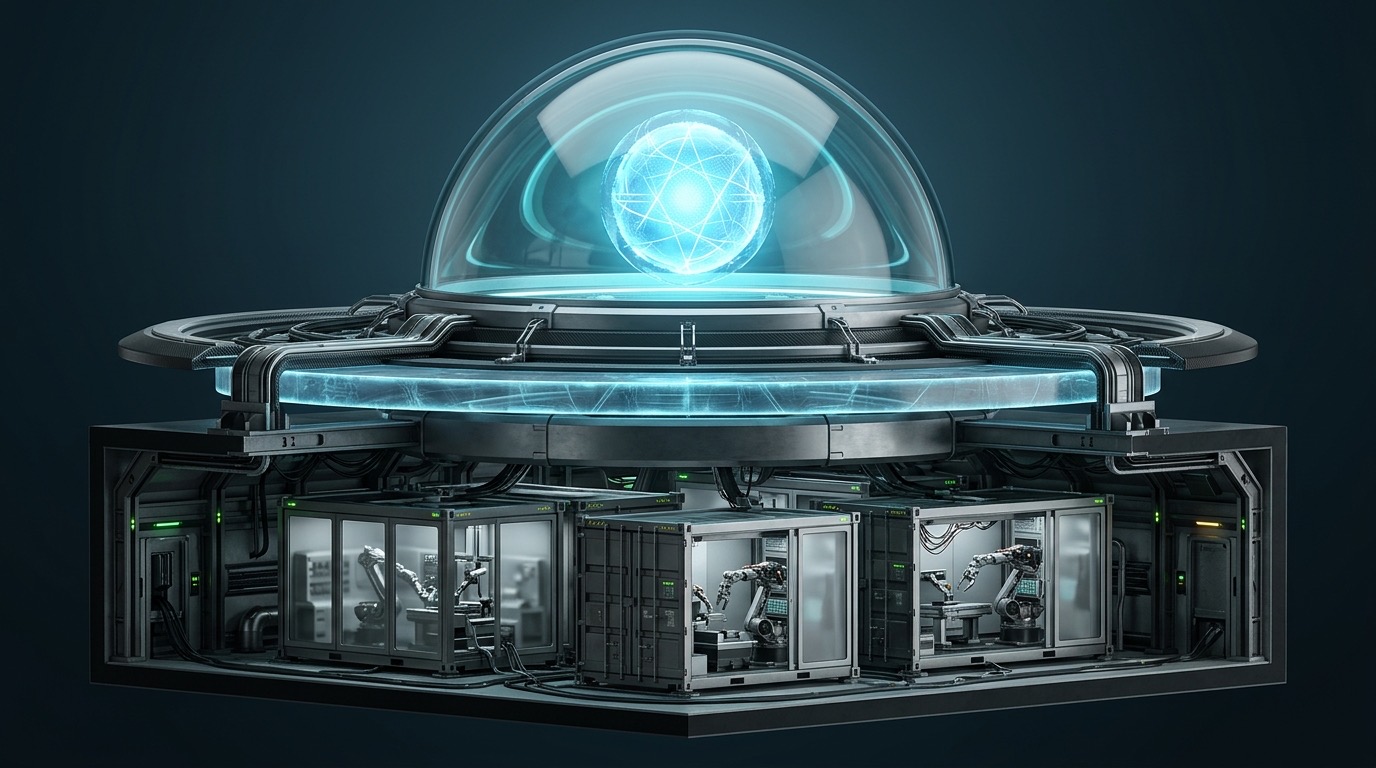
- Multi-Turn Loop Management: Streams model responses, parses tool calls, handles exponential backoff on transient 429/5xx errors, and enforces max-turn budgets.
- Session Checkpointing: Writes every message, tool request, and artifact pointer into durable storage so clients can disconnect and resume hours later.
- Context Compaction: Summarizes stale tool outputs automatically when long investigations approach context limits without losing active goals.
- Disposable Workspaces: Each session boots inside an isolated container with scratch disk for cloning repos, running tests, and compiling reports.
- Blast-Radius Containment: A runaway
rm -rfor malformed Python package affects only that ephemeral container—never the control plane or sibling tenants. - Network Egress Rules: Lock outbound container traffic to explicit package registries or
DENY_ALLso untrusted scripts cannot phone home.
while True Tool Loops5. Color-Coded Remote MCP & cma-server Anatomy
Managed Agents keep configuration cleanly partitioned: agent definitions declare endpoints and prompts, sessions bind runtime Vaults, and cma-server wires PostgreSQL persistence, model routing, and sandbox egress.
Color-Coded 5-Layer Managed Agent & Server Stack
mcp_servers: [{ type: "url", name: "linear-ops", url: "https://mcp.acme.internal/linear/mcp" }]
# 2. Session Creation: attach user-scoped Vault ID at runtime for server-side token injection
session.create(agent_id="agt_triage", environment_id="env_locked", vault_ids=["vault_usr_91f"])
# 3. Model Provider Router: direct inference to Anthropic, Bedrock, Vertex, or Foundry
CMA_PROVIDER__DEFAULT="vertex" | VERTEX_REGION="us-east5" | MODEL="claude-sonnet-4-5"
# 4. PostgreSQL Persistence: durable agents, session logs, and event listener
CMA_STORE__DATABASE_URL="postgres://cma:***@pg-primary.internal:5432/managed_agents"
# 5. Sandbox Egress Policy: restrict container network to vetted registries only
environment.networking: { type: "limited", allowed_hosts: ["pypi.org", "registry.npmjs.org"] }
- Versioned Blueprints: Commit Agent JSON/YAML definitions to Git. Because
mcp_serversholds onlyname,type, andurl, PR reviews stay 100% secret-free. - Per-User Vault Binding: Ten engineers can share one
agt_triageblueprint while each session injects that engineer’s own OAuth identity viavault_ids. - Tool Filtering: Allowlist only required MCP tool names on the agent so noisy unused endpoints never pollute the prompt.
- Pinned Toolchains: Pre-bake Python, Node.js, and internal CLI linters into an Environment image so sessions skip 40-second
pip installcold starts. - Strict Egress Allowlists: Set
allowed_hoststo exact domains (or disable internet entirely) while letting server-side MCP calls still reach SaaS APIs. - Resource Caps: Enforce memory, disk, and execution-time ceilings per sandbox container to stop infinite loops cleanly.
# Declarative Agent + Environment payload pattern (JSON): zero credentials embedded
{
  "name": "incident-investigator",
  "model": "claude-sonnet-4-5",
  "mcp_servers": [{ "type": "url", "name": "datadog-ro", "url": "https://mcp.acme.dev/datadog/mcp" }],
  "tools": [{ "type": "agent_toolset_20260401" }, { "type": "mcp_toolset", "mcp_server_name": "datadog-ro" }]
}
6. Remote HTTPS/SSE Connectors & OAuth Vaults
Remote MCP moves integrations off local laptops onto standard https://.../mcp endpoints. Combined with OAuth 2.1 and Vaults, one connector works seamlessly across Claude Web, Mobile, Cowork, and headless Managed Agents.
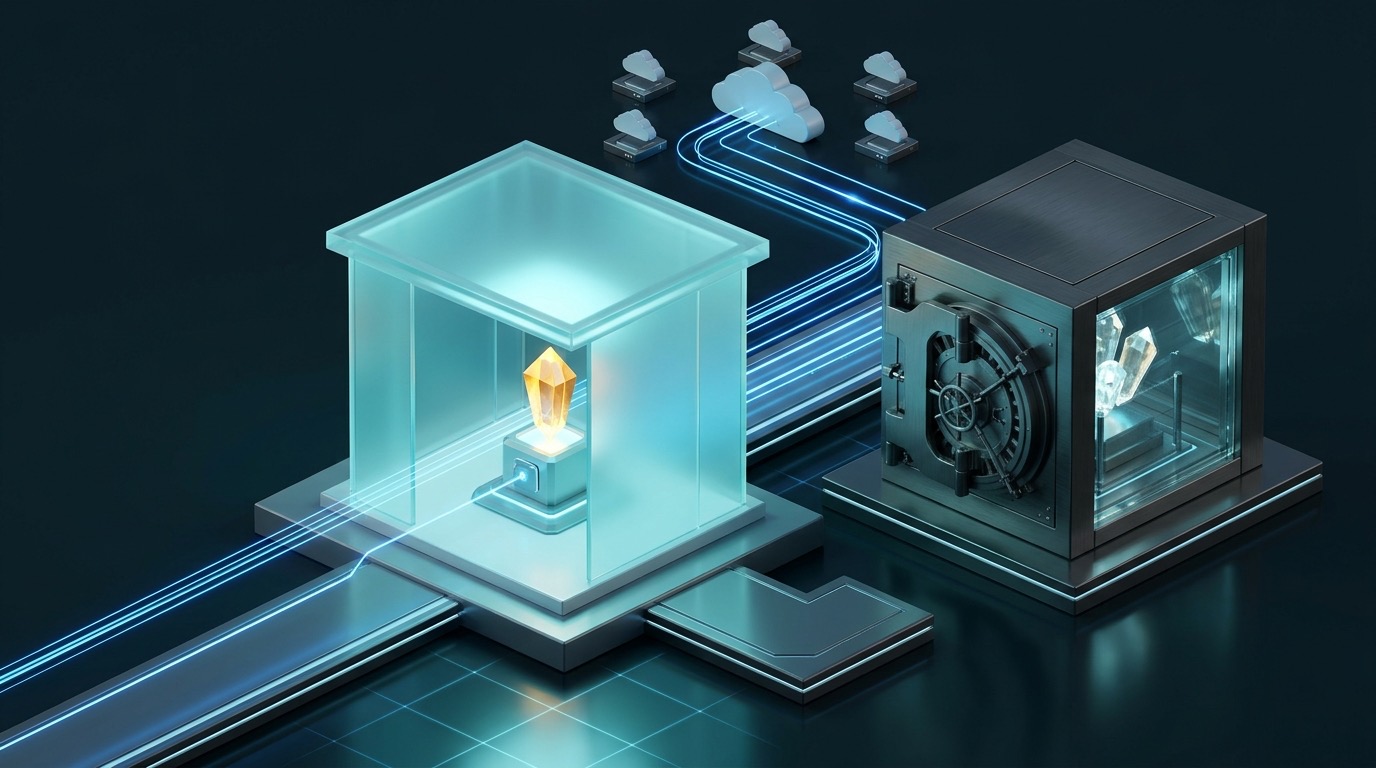
https://.../mcp calls while long-lived secrets remain locked inside the Vault—never exposed to the sandbox.
- OAuth 2.1 + PKCE & PRM: Server publishes Protected Resource Metadata (
.well-known/oauth-protected-resource) so Claude discovers scopes automatically. - Dynamic Client Registration (DCR): RFC 7591 lets Claude register as an OAuth client dynamically without manual admin client-ID copying.
- Enterprise IdP Token Exchange: Org admins federate Okta/Entra ID so employees inherit scoped access silently without 10 separate login popups.
- Static Bearer / Vault Headers: For machine-to-machine services, store the API key inside a Vault credential rather than pasting headers in plaintext.
- Streamable HTTP First: Prefer MCP’s modern Streamable HTTP (
POST /mcpwith optional SSE stream) over legacy dual-endpoint SSE for cleaner load balancing. - Disable Proxy Buffering: On Nginx, Cloudflare, or ALB, disable response buffering on
/mcpso streaming tool progress never stalls until timeout. - Firewall & Private Mesh: Cloud connectors require public HTTPS or Anthropic IP allowlisting; self-hosted
cma-serverreaches private VPC/mcpservers directly.
Settings → Connectors → Add Custom Connector makes that authenticated https://.../mcp server instantly usable from desktop, web browsers, and mobile Claude apps—no Node.js or Python setup on user devices.
7. Self-Hosting cma-server in Your VPC
Regulated industries and teams with internal-only microservices can run the entire Managed Agents control plane inside their own Kubernetes cluster or VPC using cma-server—retaining 100% session sovereignty.
Without a database, cma-server falls back to volatile memory and wipes sessions on restart. Production clusters wire CMA_STORE__DATABASE_URL to PostgreSQL 16+ so agent specs, turn checkpoints, and audit trails persist durably across pod rollouts.
High-throughput deployments configure dedicated CMA_STORE__CONTROL_DATABASE_URL (heartbeats and maintenance) and CMA_STORE__LISTEN_DATABASE_URL (PostgreSQL LISTEN/NOTIFY events). Avoid transaction-mode poolers like PgBouncer on the listener URL.
Route model calls out of cma-server directly to Anthropic API, Amazon Bedrock, Google Cloud Vertex AI, Microsoft Foundry, or an internal LiteLLM/Envoy proxy for unified spend caps, PII scrubbing, and regional failover.
Because session state lives in PostgreSQL rather than pod RAM, run 3+ stateless cma-server replicas behind an internal load balancer. If one node crashes mid-turn, another replica resumes the exact event stream seamlessly.
Production cma-server Environment & Kubernetes Pattern
# Self-hosted cma-server core environment wiring (inject passwords via K8s Secrets / External Secrets)
CMA_STORE__DATABASE_URL="postgres://cma_app:${DB_PASS}@pg-ha.internal:5432/cma?sslmode=require"
CMA_STORE__CONTROL_DATABASE_URL="postgres://cma_app:${DB_PASS}@pg-ha.internal:5432/cma?sslmode=require"
CMA_STORE__LISTEN_DATABASE_URL="postgres://cma_app:${DB_PASS}@pg-direct.internal:5432/cma?sslmode=require" # No PgBouncer txn pooling
ANTHROPIC_BEDROCK_BASE_URL="https://bedrock-runtime.us-east-1.amazonaws.com" # Or Vertex / Foundry / Anthropic API| Sovereignty Requirement | How Self-Hosted cma-server Solves It |
Operational Tip |
|---|---|---|
| Zero Public Exposure for Internal APIs | cma-server calls cluster-local https://*.svc.cluster.local/mcp services inside your VPC. |
Enforce mTLS or network policies so only the cma-server namespace can reach internal MCP pods. |
| Data Residency & Audit Logs | All conversation transcripts, tool outputs, and agent artifacts remain inside your PostgreSQL & object store. | Schedule encrypted PostgreSQL backups and set retention TTLs on archived session rows. |
| Multi-Region Model Failover | Swap or failover between Bedrock, Vertex, and Foundry endpoints without touching client SDK code. | Pair with health checks on your inference gateway and configure per-agent token rate limits. |
8. 5 Real-World Managed Agent & MCP Blueprints
Use these five production blueprints as starting templates. Notice how every design isolates secrets in Vaults, trims exposed MCP tools to essentials, and pairs sandboxed execution with clear human approval boundaries.
| Blueprint & Hosting | Remote /mcp Stack & Auth |
Sandbox Work & Approval Boundary |
|---|---|---|
1. On-Call Incident Investigatorcma-server (VPC)Bedrock / Vertex |
MCP: datadog-ro + github-ro + pagerduty via internal VPC HTTPS.Auth: Service Vault token (read-only). |
Sandbox: Checks out commit SHA, runs reproduction script inside DENY_ALL container.Gate: Posts root-cause brief to Slack; requires human click before reverting PRs. |
| 2. Autonomous PR Reviewer Cloud Managed Agents Anthropic API |
MCP: https://mcp.acme.dev/github/mcp (filtered to 4 PR tools).Auth: GitHub App OAuth inside Org Vault. |
Sandbox: Runs unit tests, linters, and migration checks cleanly. Gate: Auto-posts line comments; merge_pull_request blocked behind maintainer approval. |
| 3. RevOps Weekly Cohort Analyst Cloud Managed Agents Web + Scheduled API |
MCP: snowflake-ro + hubspot-ro + slack-post.Auth: Per-analyst OAuth 2.1 PKCE Vault. |
Sandbox: Runs Python pandas cohort reconciliation and builds .xlsx + .pptx outputs.Gate: Delivers draft deck to private channel before executive broadcast. |
4. Support Escalation Triagecma-server + CoworkMicrosoft Foundry |
MCP: zendesk + linear + internal billing-ro.Auth: Entra ID IdP token exchange. |
Sandbox: Parses uploaded HAR logs and stack traces without risking host OS. Gate: Creates Linear bug automatically; refunds/credits pause for support lead sign-off. |
5. Overnight Security Patchercma-server (K8s)PostgreSQL 16+ |
MCP: snyk-vulns + gitlab-internal.Auth: Short-lived Vault tokens scoped to dev-patches/* branches. |
Sandbox: Upgrades vulnerable lockfiles, runs full test suite, and verifies build. Gate: Opens draft MR with diff proof; zero direct push permissions to main. |
Starter Session Launch Pattern (Agent + Environment + Vault Binding)
# Bind a versioned, secret-free agent blueprint to an isolated sandbox environment and user Vault at session start
session = client.beta.sessions.create(
    agent=agent_id,                          # Declares instructions + https://.../mcp URLs only
    environment_id="env_py312_restricted",   # Disposable container with allowed_hosts egress policy
    vault_ids=[user_oauth_vault_id],         # Server-side token broker; sandbox never sees raw credentials
    title="PR #482 Regression Triage"
)
9. Security, Blast-Radius Containment & Schema Hygiene
Connecting autonomous agents to live company systems introduces two distinct risks: oversized blast radii if a tool mutates data unchecked, and indirect prompt injection hidden inside external tickets, PR comments, or database rows.
Separate read tools (get_*, search_*, query_*) from write tools (delete_*, merge_*, send_*). Auto-approve reads so agents move fast, and enforce human confirmation on every external state change.
Treat every third-party MCP tool description and returned payload as untrusted data. Pin vetted server versions, strip hidden HTML/markdown instructions, and never mix untrusted web-scrape tools with privileged write keys in one session.
Every MCP tool injects its JSON schema into the system prompt (~150–300 tokens each). Loading 60 tools wastes 12,000+ tokens before Turn 1 and lowers accuracy. Filter each agent down to 5–15 sharp tools.
Four-Layer Defense Matrix for Production MCP Deployments
| Threat Vector | Failure Mode Without Controls | Managed Agents + MCP Defense |
|---|---|---|
| 1. Secret Exfiltration via Bash | Prompt-injected code inside sandbox prints env or curls API tokens to an attacker host. |
Store tokens in server-side Vaults (never container env vars) and lock sandbox networking to allowed_hosts. |
| 2. Indirect Prompt Injection | Malicious text inside a Jira ticket tells the agent to export customer emails via Slack MCP. | Require confirmation gates on outbound/write tools and scope OAuth tokens strictly to least-privilege read scopes. |
| 3. Tool Poisoning / Rug Pulls | An external MCP server silently mutates its tool description after approval to hijack model behavior. | Audit remote servers before allowlisting, pin verified internal gateways, and alert on unexpected tool schema diffs. |
| 4. Context Bloat & Wrong Tool Pick | Connecting 5 full SaaS servers dumps 80 overlapping tools, burning tokens and causing hallucinated parameters. | Split into specialized role agents (Triage vs. Finance) and allowlist only exact needed tool names per agent. |
10. Cross-Tool Synergy: Skills + Managed Agents + MCP
Claude Skills teach your team’s rules and formatting standards, cma-server orchestrates durable multi-turn loops, and Remote /mcp Connectors supply live authenticated data—producing verified Data and Code artifacts automatically.
End-to-End Walkthrough: Automated Weekly Engineering & Revenue Audit
revops-audit Skill instructs Claude on exact ARR exclusion rules, chart styles, and validation scripts without cluttering idle prompts.
cma-server: A scheduled job opens a Managed Agent session backed by PostgreSQL and routes reasoning through Vertex AI or Bedrock.
/mcp: The Vault injects scoped OAuth tokens to pull live warehouse metrics and GitHub release notes server-side.
scripts/validate.py and emits checked .xlsx, .pptx, or PR artifacts.
/mcp tools without touching sandbox images.
11. Troubleshooting Clinic & Pre-Flight Checklist
Most Managed Agent and Remote MCP snags come from proxy buffering, OAuth redirect URIs, PgBouncer listener pooling, or bloated tool lists. Use this quick clinic to diagnose and resolve issues in seconds.
| Symptom | Root Cause | 10-Second Fix |
|---|---|---|
1. Remote /mcp hangs or times out |
Reverse proxy (Nginx/ALB/Cloudflare) buffers SSE chunks instead of streaming immediately. | Disable proxy buffering on /mcp (e.g., proxy_buffering off;) and set idle timeouts above 300s. |
| 2. OAuth handshake fails on connect | Missing .well-known PRM metadata, strict redirect mismatch, or blocked DCR endpoint. |
Verify RFC 9728 metadata, allowlist Claude’s OAuth callback URL, or supply custom OAuth client credentials. |
3. cma-server loses sessions on restart |
CMA_STORE__DATABASE_URL unset, causing fallback to ephemeral in-memory store. |
Point CMA_STORE__DATABASE_URL to PostgreSQL 16+ and confirm schema migrations succeed at boot. |
| 4. DB event listener disconnects randomly | CMA_STORE__LISTEN_DATABASE_URL routed through a transaction-mode PgBouncer pooler. |
Connect LISTEN_DATABASE_URL directly to PostgreSQL (or session-mode pooler) so LISTEN/NOTIFY stays open. |
| 5. Sandbox bash fails to hit internal API | Sandbox egress policy blocks outbound calls, or developer tried calling Vault secrets inside bash. | Route private API access through server-side /mcp + Vault instead of container scripts; allowlist only package hosts. |
| 6. Agent picks wrong MCP tool or stalls | Too many overlapping tool schemas (50+) bloat prompt context and confuse parameter selection. | Trim mcp_toolset down to 5–15 sharp tools per agent and write crisp single-purpose parameter descriptions. |
| 7. 401/403 from Bedrock, Vertex, or Foundry | Expired cloud IAM role, missing region quota, or mismatched model ID mapping in router. | Verify cloud IAM/OIDC permissions, confirm model availability in target region, and test gateway health endpoint. |
https://.../mcp URLs; all tokens live inside Vaults.cma-server points to durable PostgreSQL with direct listener connectivity.allowed_hosts or DENY_ALL./mcp SSE/HTTP responses, OAuth token refresh, and provider failover.